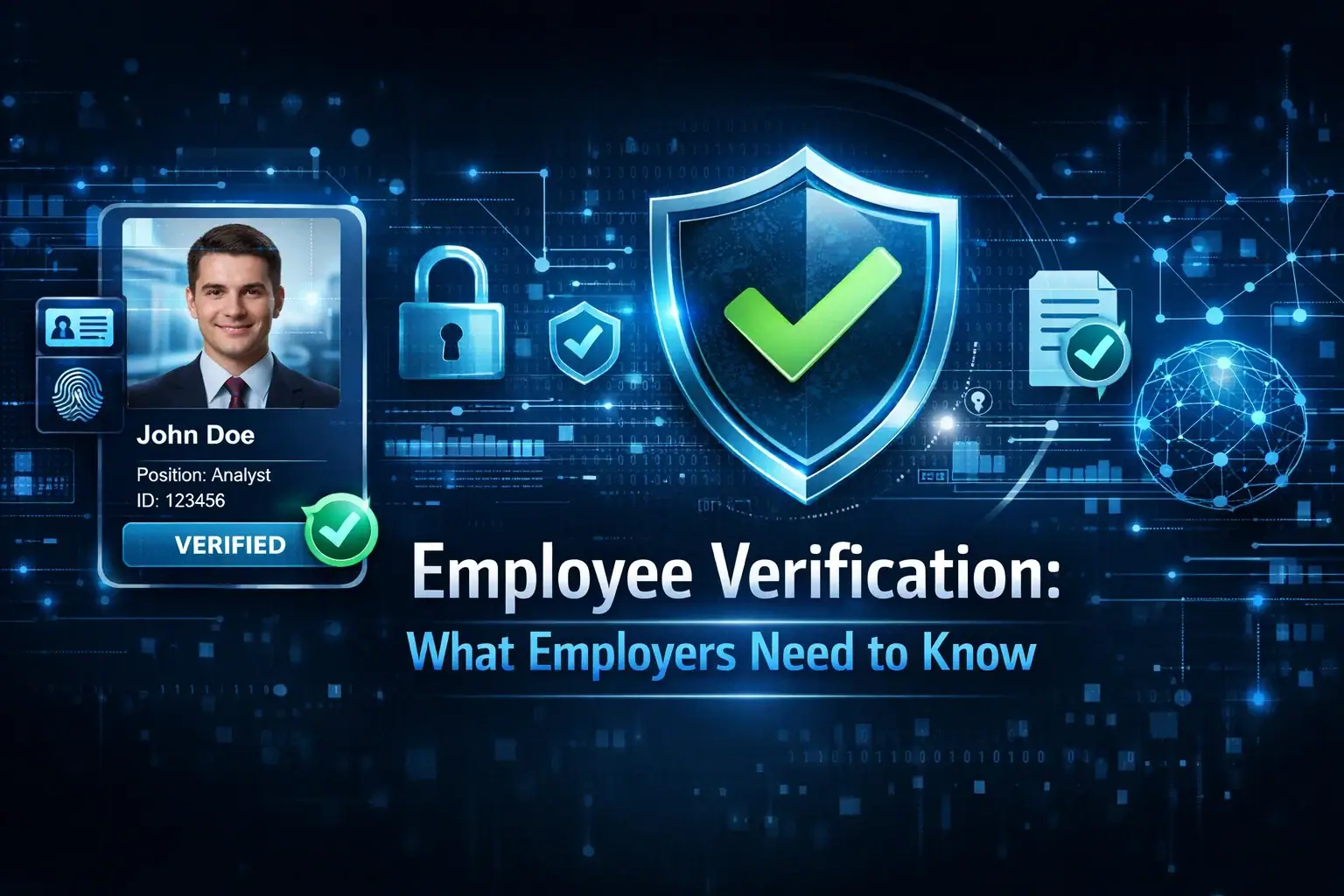
Employee Verification: What Employers Need to Know
2026-02-05
General
Back to Blogs
Hiring the right people is one of the most important responsibilities for any employer. A candidate may look perfect on paper but without proper verification businesses risk bringing in inaccurate information verification issues or even fraud. This is why employee verification has become a critical part of modern hiring and workforce management.
Employee verification helps employers confirm that the information shared by a candidate is accurate and reliable. From identity details to past employment history verification builds trust and reduces risk across the organization.
To understand the employee verification meaning it is important to look at its role in the hiring lifecycle. Employee verification is the process of validating a candidate’s professional and legal information before or during employment.
This process ensures that employers are making informed hiring decisions. It also helps organizations maintain a safe, aligned and trustworthy workplace. Employee verification is not limited to large enterprises; it is equally important for startups and growing businesses.
Employee verification is essential for protecting business interests. Without proper checks employers may face operational risks financial losses or reputational damage.
Employee verification for employers helps reduce these risks by ensuring that employees meet internal and guidelines standards. It also promotes workplace safety and builds confidence among teams and stakeholders.
Key reasons employee verification matters include:The employee verification process typically begins after a candidate accepts a job offer. At this stage employers collect required details and initiate verification checks based on company policies.
The process usually includes identity verification employment history validation and other relevant checks. A structured approach ensures consistency and reduces delays in onboarding. When handled correctly employee verification supports smoother hiring and faster workforce integration.
An employee verification check helps employers validate different aspects of a candidate’s profile. The exact checks may vary depending on the role and industry but consistency is key.
Common employee verification checks often include:These checks help employers confirm that the information provided by candidates is accurate and complete.
Employee background verification focuses on reviewing a candidate’s Work history to identify any discrepancies or risks. This is a critical part of the employee review process especially for roles involving trust information access or financial responsibility.
Background verification supports informed hiring decisions by highlighting inconsistencies early. It also helps employers avoid future disputes or verification challenges linked to inaccurate employee information.
Every organization defines its own employee verification requirements based on industry norms job roles and verification needs. However some requirements are common across most employers.
These usually include identity documents address proof previous employment details and consent from the employee. Clear requirements help streamline the verification process and reduce back-and-forth communication during onboarding.
Following employee verification best practices helps employers achieve accurate and reliable results. A structured and transparent approach improves efficiency and builds trust with candidates.
Best practices include:By following these practices employers can ensure that employee verification remains consistent and aligned across the organization.
Many employers still rely on manual verification methods. This often leads to delays errors and increased administrative workload.
Common challenges include incomplete documentation inconsistent checks and lack of visibility into verification status. As hiring volumes grow these issues become harder to manage without a clear verification framework.
A well-defined employee review process helps employers manage verification efficiently. It ensures that every candidate goes through the same checks reducing bias and inconsistency.
Structured review also supports verification audits and improves overall hiring quality. Over time it helps employers build a reliable and trustworthy workforce.
By applying consistent employee verification checks and adopting employee verification best practices employers can build safer workplaces and make confident hiring decisions. For organizations focused on long-term growth and verification employee verification is not optional it is essential.
If you want support with employee verification or need guidance on implementing a reliable verification process contact us today. You can also reach our team at business@apimall.in for expert assistance.