Top Use Cases of Vehicle APIs for Businesses in India: From Verification to Challan Management
2025-05-27
General
Back to Blogs
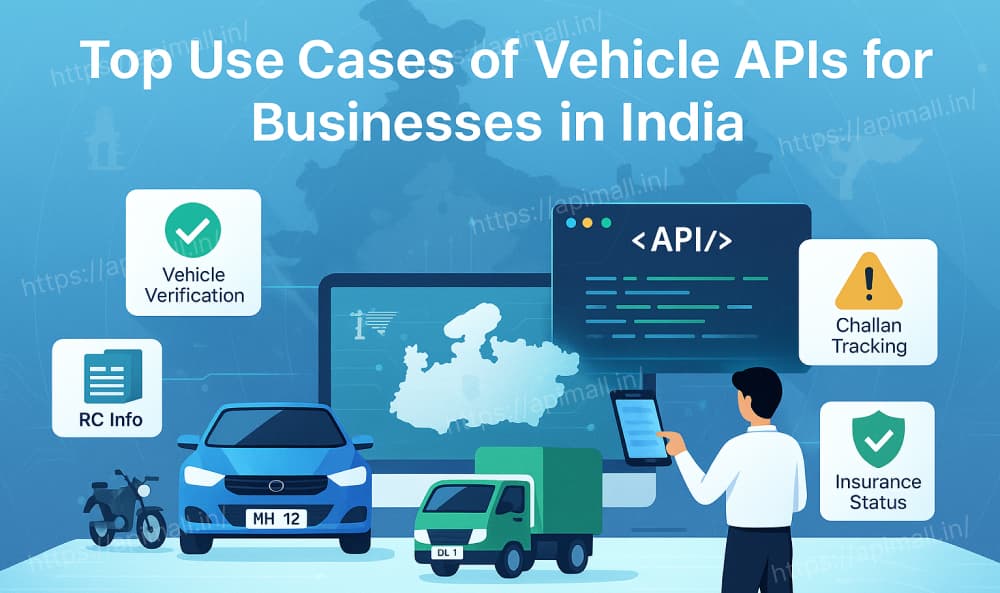
In India businesses that deal with vehicles—whether in finance logistics insurance or mobility—are increasingly turning to vehicle APIs. These APIs allow for real-time access to official vehicle data making processes faster more secure and highly efficient. Let’s explore the most impactful ways vehicle APIs are transforming business operations.
A vehicle API is a software interface that connects business systems with government or authorized vehicle databases. This enables automated access to information such as vehicle registration owner details insurance status and traffic challans.
Vehicle verification APIs and RC APIs in India are vital for confirming the authenticity of a vehicle’s registration certificate (RC).
Common business uses:
Benefits:
Challan APIs help businesses manage traffic fines efficiently.
Use cases:
Benefits:
APIs for insurance verification allow businesses to instantly check the insurance status of any vehicle.
Use cases:
Benefits:
Fleet management APIs and real-time vehicle data APIs provide live updates on vehicle location status and documentation.
Use cases:
Benefits:
APIs for vehicle owner details and vehicle info help businesses verify ownership and check for past incidents.
Use cases:
Benefits:
Some APIs enable automatic extraction of vehicle info from scanned documents or images simplifying onboarding and verification.
Use cases:
Benefits:
When selecting a vehicle API in India consider:
Implementation steps:
From vehicle verification and challan management to insurance checks and fleet optimization vehicle APIs are unlocking new levels of efficiency and security for Indian businesses. By leveraging these tools companies can reduce costs minimize risk and deliver better experiences to customers and partners.
You can easily integrate the Vahan API into your system using restfull endpoints. ApiMall.in provides detailed documentation and technical support to help your business verify RC details and vehicle registration status seamlessly.
For logistics companies the Challan API offered by ApiMall.in allows real-time tracking and management of traffic fines reducing operational risks preventing legal issues and boosting overall fleet compliance.
DL (Driving License) APIs provided by ApiMall help insurers validate driver credentials instantly streamline policy issuance reduce fraud and meet compliance norms during customer onboarding.
Yes. Through ApiMall’s vehicle challan API businesses can fetch challan status online monitor pending fines and manage settlements—all within their internal applications for higher efficiency and transparency.