GST Verification API for E-Commerce Platforms Buyer GST Check
2026-02-09
General
Back to Blogs
When a buyer enters a GST number on an e-commerce platform the platform takes on the responsibility of validating that information. Accepting GST numbers without verification can expose platforms to verification risks incorrect invoicing and disputes with buyers. This is why many platforms now rely on a GST verification to validate buyer GST details in real time.
Buyer GST verification is not just a technical step. It directly affects tax verification billing accuracy and platform credibility. If a business buyer provides an invalid or inactive GST number the invoice generated by the platform may become non-Validation.
Some of the common risks faced by e-commerce platforms when GST numbers are not verified include:
Using a GST number verification API allows platforms to validate GST details before an order is confirmed. This ensures that GST benefits are extended only to eligible business buyers.
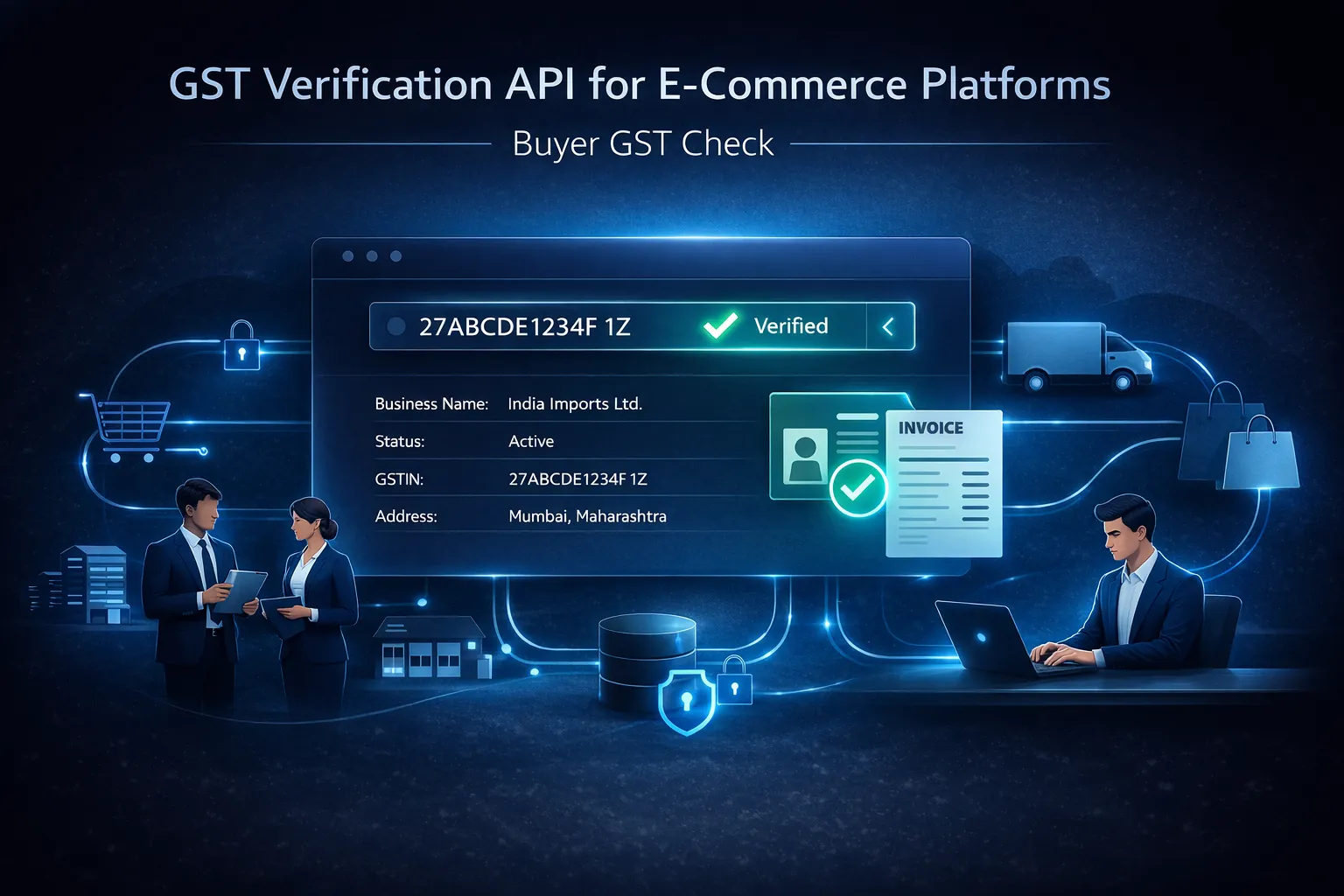
In B2B e-commerce GST verification fits naturally into the buyer journey. Most platforms collect GST details either during account creation or at checkout. At this stage the platform can trigger an API for GST number verification to validate the GSTIN entered by the buyer.
Some platforms also perform GST checks just before invoice generation. This additional validation step ensures that GST details remain accurate at the time of billing. By integrating GST verification directly into the purchase workflow platforms can maintain verification without adding friction to the buying experience.
Manual GST verification is difficult to sustain for growing e-commerce platforms. It often involves staff members checking GST information through public verification interfaces and updating records manually. This process is slow and prone to error especially when transaction volumes increase.
Manual verification typically leads to issues such as:
These challenges make manual GST checks unsuitable for modern e-commerce platforms that operate at scale.
A GST number verification API uses structured verification mechanisms to validate GST numbers in real time. When a buyer enters a GST number the API verifies its structure registration status and associated business details.
The verification response usually confirms:
An API for GST verification returns this information instantly allowing the platform to proceed with checkout and invoicing without manual intervention. This ensures consistent and accurate GST validation across all transactions.
Integrating GST verification APIs brings multiple benefits for B2B e-commerce platforms. These benefits go beyond verification and directly impact Process reliability and buyer trust.
Key advantages include:
Misuse of GST numbers is a known challenge in B2B commerce. Some buyers may attempt to use cancelled GST registrations while others may enter GST numbers that do not belong to their business. If such cases are not detected early platforms may issue invoices that later become problematic.
A GST verification API in India enables real-time validation and helps platforms block incorrect GST entries immediately. This proactive approach protects the platform from Fiscal impact and ensures that GST benefits are applied only where applicable.
When evaluating a solution platforms often consider GST verification API cost as an important factor. The cost of a GST verification API generally depends on usage volume frequency of verification and the type of information required.
For most platforms API-based verification is more cost-effective than manual checks. It reduces operational effort minimizes invoice corrections and helps avoid penalties that may arise from incorrect GST handling. Over time the efficiency gains outweigh the API costs.
GST registrations in India can change due to suspension cancellation or updates in business status. A GST number that was valid earlier may not remain valid indefinitely. Relying on stored GST information without verification can lead to outdated or incorrect billing.
Real-time GST verification ensures that e-commerce platforms always work with the latest GST status. This is particularly important for platforms that handle frequent repeat purchases from business buyers.
GST verification should be treated as a core capability rather than a one-time verification task. Leading e-commerce platforms integrate GST verification APIs directly into their systems so that checks happen automatically during buyer interactions.
By embedding GST verification into account creation checkout and invoicing workflows platforms ensure consistency and long-term verification without manual intervention.
For B2B e-commerce platforms buyer GST verification is essential for aligned and scalable operations. A GST verification API enables platforms to validate business GST details in real time reduce verification risk and ensure accurate invoicing.
As e-commerce continues to grow and Guidelines increases API-driven GST verification becomes a necessary part of platform infrastructure. Platforms that invest in reliable GST verification today are better positioned to scale with confidence in India’s evolving digital commerce landscape.