White Collar Employee Verification for Corporate Companies
2026-01-12
General
Back to Blogs
Hiring the right people is one of the biggest responsibilities for corporate companies. White collar employees work in roles that involve decision-making Information access financial Responsibility and business strategy. Any mistake in hiring can lead to serious risks. This is why White collar employee verification has become a critical part of corporate hiring processes.
For large organizations verification is not only about trust. It is also about Verification information security and long-term stability. A structured verification process helps companies build a reliable workforce while avoiding fraud and reputational damage.
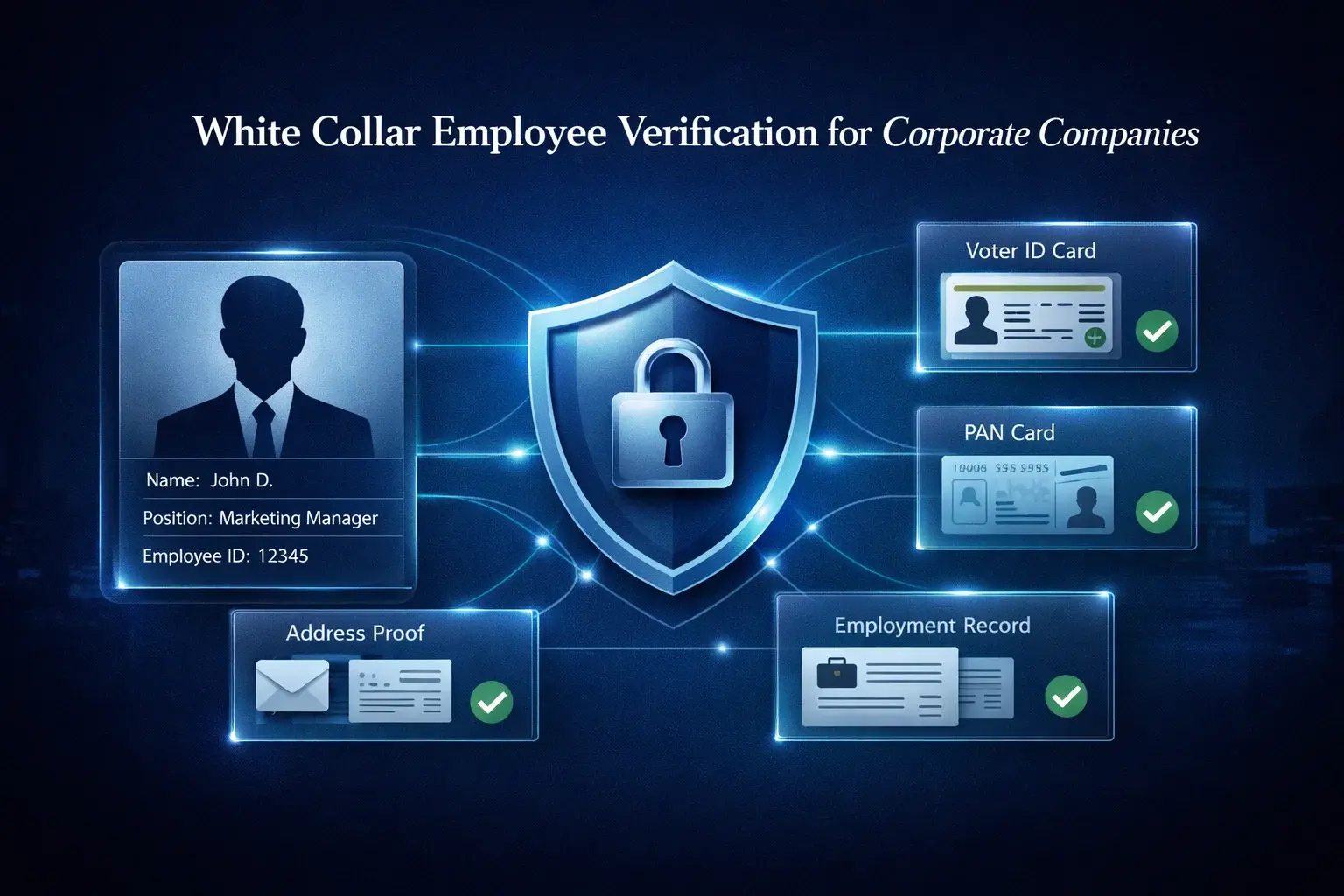
White collar employee verification is the process of validating a professional employee’s credentials and professional information before or during employment. It goes beyond basic checks and focuses on verifying information that directly impacts corporate risk.
This process supports Corporate employee verification by ensuring that employees are genuine qualified and suitable for their roles. It is especially important for organizations hiring at scale or operating in regulated environments.
Large corporate companies manage sensitive assets such as business information internal systems and financial records. Without proper verification even one wrong hire can create major problems.
Key reasons corporate companies invest in verification include:
Effective employee background verification helps reduce these risks and supports informed hiring decisions.
Corporate companies rely on multiple verification checks to ensure hiring accuracy and Verification.
ID verification confirms that the employee is legally identifiable and authentic. It forms the base of employee identity verification and prevents impersonation or fake profiles.
Criminal verification identifies risk indicators related to legal information that may pose a risk. This check is especially important for roles involving finance information access or leadership responsibilities.
Employment verification confirms the accuracy of current or recent employment details. It strengthens corporate hiring verification by ensuring role and employer details are genuine.
Education verification validates degrees certifications and academic claims. It protects organizations from fake qualifications and supports professional employee verification.
This check reviews previous employers job continuity and employment duration. It helps identify false experience claims during corporate background verification.
Address verification confirms submitted address information and supports Verification needs. It also helps organizations manage remote and distributed teams securely.
Large enterprises often hire in high volumes and across multiple locations. Manual checks are slow and prone to error. This is why enterprise employee verification focuses on structured and standardized processes.
Enterprise-level verification helps organizations:
For large companies verification is not a one-time task. It is an ongoing risk control mechanism.
Pre-employment verification for corporates ensures that all checks are completed before an employee joins the organization. This prevents situations where unverified employees gain early access to systems or customer details.
Completing verification before onboarding:
This approach supports safer and more predictable hiring outcomes.
Today’s corporate hiring environment demands more transparency and accountability. Corporate background verification allows companies to validate claims made during interviews and documentation stages.
By verifying identity employment history education and legal information organizations reduce dependency on self-declared information and make information-backed hiring decisions.
Verification plays a key role in secure employee onboarding. When employees are verified before joining onboarding becomes faster and safer.
Benefits include:
Secure onboarding sets the foundation for a validation and productive workplace.
For corporate companies hiring is not just about filling positions. It is about building a trustworthy workforce that supports growth and Verification. White collar employee verification helps organizations reduce risk improve hiring quality and protect their business.
By adopting structured verification practices companies can strengthen corporate employee verification improve employee background verification and ensure safer hiring outcomes across the enterprise. In today’s competitive and regulated environment verification is no longer optional it is essential.