Guide to Verifying Vehicle Register Using RC Verification API
2026-01-20
Logistic & Transport
Back to Blogs
Vehicle register verification has become a core requirement for businesses that deal with vehicles at any stage of a transaction. Whether it is a used car marketplace, an insurance provider, a lender, or a logistics company, confirming who legally owns a vehicle is critical for trust and verification. Relying only on physical RC copies or customer-declared information is no longer enough in today’s digital environment.
As vehicle-related services move online, the risks associated with incorrect vehicle register information have also increased. Forged documents, delayed Vehicle register transfers, and incomplete records are common challenges. This is why vehicle RC verification has evolved from a manual task into a digital process powered by API that can validate vehicle register quickly and accurately.
vehicle register disputes are not always visible at the start of a transaction. In many cases, problems surface only after a loan is approved, a policy is issued, or a vehicle is sold. A vehicle may still be registered under a previous owner, be linked to an active loan, or have mismatched details across records.
For businesses, these gaps can result in financial loss, operational complications, and customer dissatisfaction. Vehicle vehicle register verification online helps reduce these risks by validating vehicle register information before decisions are made. Instead of depending on documents uploaded by users, businesses can confirm details directly through digital verification systems.
This approach is especially important for companies operating at scale. As volumes grow, even a small percentage of incorrect vehicle register records can create serious operational issues. Early verification helps maintain information accuracy and protects businesses from downstream problems.
Manual RC verification typically involves checking scanned copies or photos of registration certificates. While this method may work for low volumes, it becomes unreliable as transaction volume increases. Documents can be unclear, outdated, or intentionally altered, making verification difficult.
Common challenges include:
Manual processes also slow down onboarding and approvals. Customers expect quick responses, and delays can lead to drop-offs. These challenges have pushed many organizations to move away from document-based checks toward automated solutions.
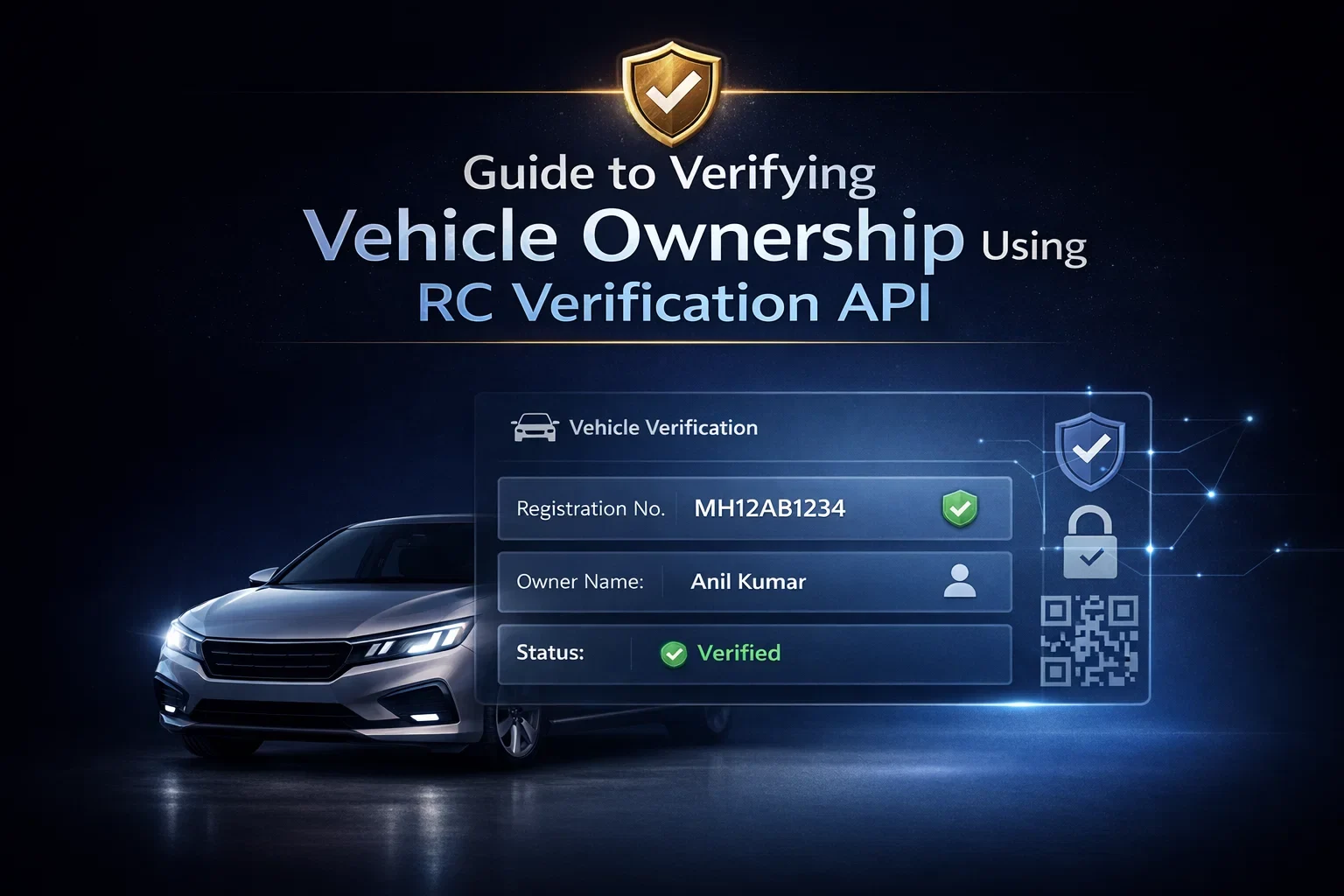
An RC verification API allows businesses to validate vehicle register details using the vehicle’s registration number. Instead of manually reviewing documents, systems can perform an RC check by registration number and receive verified information in real time.
The verification process is simple from a business perspective. The registration number is submitted to the system, and the API validates it against authoritative records. The response includes vehicle register and vehicle-related details that can be used for decision-making.
This approach makes it easier to verify vehicle owner details without human intervention. Since the process is automated, it reduces errors and ensures that every verification follows the same standards. It also allows businesses to integrate verification directly into their existing workflows.
A vehicle registration verification API is widely used across industries where accurate vehicle information is essential. Used car platforms rely on it to ensure that sellers are the legal owners of the vehicles they list. This helps prevent disputes after a sale and builds trust with buyers.
Insurance companies use vehicle RC lookup APIs during policy issuance to ensure that the policyholder matches the vehicle registration information. This reduces the risk of incorrect policy issuance and claim-related issues later. Lenders and NBFCs depend on verified vehicle register information before approving vehicle-backed loans, as incorrect vehicle register can lead to recovery and legal challenges.
Fleet operators and logistics companies also use vehicle registration verification APIs during onboarding. With large fleets, manual verification becomes impractical. Digital verification ensures accurate records across all vehicles and supports better fleet management.
Used car transactions are particularly sensitive when it comes to vehicle register verification. Many vehicles are sold without completing proper vehicle register transfer, and buyers often rely on seller-provided documents without independent validation.
RC verification for used car workflows helps address these risks by confirming vehicle registration details before the transaction is finalized. This ensures that the seller is the registered owner and that there are no hidden issues related to loans or registration status.
Key checks include:
By verifying these details early, platforms and buyers can avoid disputes, delays in transfer, and potential operational complications.
Manual verification processes struggle to meet the speed and accuracy required by modern digital businesses. An automated vehicle verification API enables instant validation without slowing down onboarding or approvals. Real-time RC verification ensures that the information used for decisions reflects the current status of the vehicle.
Automation also improves consistency. Every verification follows the same logic and information source, reducing variation caused by human judgment. This is particularly important for businesses handling high transaction volumes.
Key benefits include:
By adopting automated verification, businesses can focus on growth without compromising verification or information quality.
A vehicle RC lookup API provides access to important vehicle register and vehicle-related details that support informed decision-making. These details go beyond basic vehicle register confirmation and help businesses assess risk more effectively.
Commonly validated information includes the registered owner name, vehicle make and model, and registration status. The API can also reveal whether the vehicle is under hypothecation or linked to an active loan.
Having access to these verified details helps businesses avoid decisions based on incomplete or outdated information. It also supports better record-keeping and internal information readiness.
Vehicle vehicle register verification is no longer a secondary step in vehicle-related transactions. As businesses move toward digital-first operations, manual verification methods are proving to be slow, inconsistent, and difficult to scale.
By using an RC verification API, organizations can adopt a more reliable and efficient approach to vehicle register validation. Automated and real-time RC verification supports faster decisions, reduces fraud risk, and strengthens trust across vehicle-related workflows. As the ecosystem continues to evolve, digital vehicle verification will remain a critical component of secure and follows guidelines operations.