Blue Collar Staff Verification for High-Volume Hiring Growth
2026-02-12
General
Back to Blogs
High-volume hiring is now common in logistics mobility manufacturing warehouses staffing firms and gig platforms. Many companies onboard hundreds of workers every month sometimes every week. In this kind of growth blue collar staff verification becomes a business need not just an HR step.
Blue collar teams work on the ground. They deliver parcels drive vehicles handle goods operate machines and support service operations. When hiring speed goes up risk also goes up. That is why a structured blue collar verification approach helps companies scale with control. It ensures the right people enter your workforce and the wrong ones do not.
When hiring happens fast teams often reduce checks to meet targets. But small gaps at onboarding can create bigger losses later. A weak verification process can also create Verification issues customer complaints and safety incidents.
Here are common risks seen in high-volume hiring:
These risks are not limited to one industry. They affect delivery operations factory floors warehouses and field services. As your workforce grows it becomes harder to track people if the verification foundation is weak.
A reliable worker verification process should cover basic identity checks and role-specific checks. The goal is simple: confirm the worker is real eligible and suitable for the job.
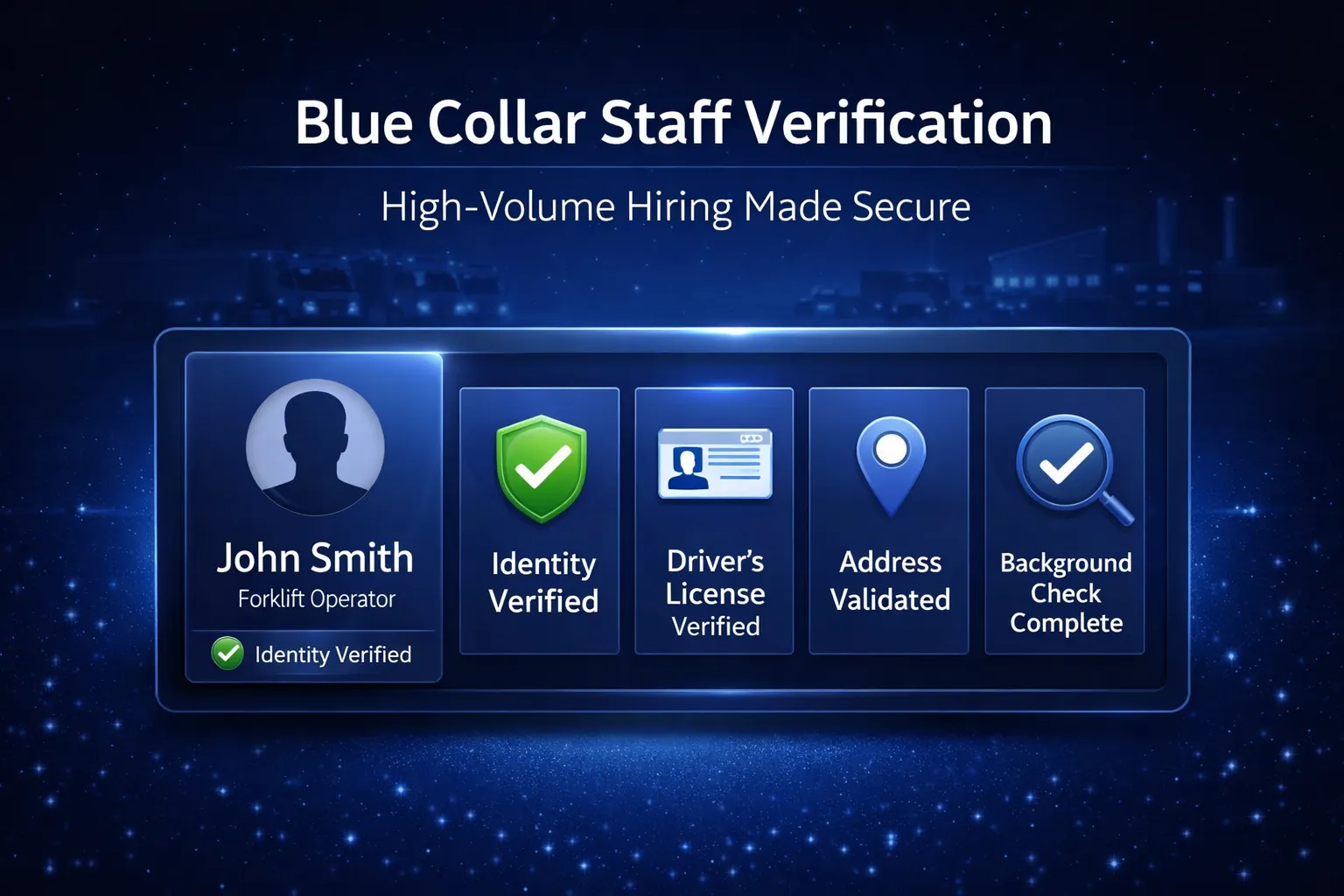
Key checks in blue collar staff verification include:
This set of checks forms the base of blue collar background verification. It reduces mistakes at onboarding and creates accountability from day one.
A strong verification setup prevents problems before they enter your operations. It is cheaper to block a risky profile early than to manage incidents later. This is why blue collar background verification plays a direct role in risk reduction.
In logistics and mobility verified drivers lower accident risk and reduce complications. In warehouses verified staff reduces internal loss and improves discipline. In manufacturing verification supports safety and Verification checks especially when contractors are involved.
For roles where workers deliver services at customer locations verification becomes even more important. This is where blue verification of service collar workers builds trust. It helps ensure the person representing your brand is verified and traceable.
India’s gig economy has expanded fast. Delivery networks ride-sharing hyperlocal services and e-commerce depend on flexible workforces. This has made delivery staff verification and gig worker verification India critical for platform reliability.
Gig hiring often happens through apps. Workers apply digitally and expect fast onboarding. But faster onboarding should not mean weaker checks. High turnover and frequent re-joining across platforms can also increase identity misuse if verification is not strong.
When platforms maintain consistent verification standards they protect customers and reduce disputes. They also build a stronger workforce culture where verified workers feel safer and more valued.
A scalable verification flow should be simple repeatable and easy to monitor. It should work the same way in every city and branch. This reduces confusion and keeps standards consistent.
A practical worker verification process usually looks like this:
This step-by-step flow supports clean hiring while keeping operations fast.
Manual verification works when hiring numbers are low. But in high-volume hiring manual checks slow teams down and increase errors. That is why many companies move to digital workforce onboarding verification.
Digital verification helps businesses scale because it is faster and more consistent. It also reduces dependency on paper and manual follow-ups.
Key benefits include:
API-based verification also fits well with modern onboarding systems. It allows platforms to run checks inside their hiring workflow without shifting teams to separate tools.
High-volume hiring supports growth but it also increases risk. Industries like logistics mobility manufacturing and gig platforms cannot afford weak onboarding standards. That is why blue collar staff verification is a key part of scalable hiring.
A consistent blue collar verification setup reduces fraud improves safety and supports Verification. It strengthens delivery staff verification and supports gig worker verification India at scale. Most importantly it creates a repeatable worker verification process that helps companies expand across regions with confidence.
When verification is built into onboarding growth becomes safer smoother and more reliable. That is what makes strong workforce onboarding verification a long-term advantage for any high-volume business.